Post plans
Write only the posts that can rank, with the plan already in hand
GapDigest picks a keyword a competitor already ranks for, works out whether it's a new post or an update to one of your own top pages, and sends you the plan: title, outline, and the questions readers ask. You write it. The research is done.
Four post plans a month free, 20 on Starter for $19.
- Chosen from the keywords a competitor already ranks for
- The angle comes from reading their page and yours
- Arrives with the weekly report, without asking
What a post plan gives you
A keyword list tells you where you're behind. A post plan tells you which post to write, how to beat the page that ranks, and what it has to cover. It is a plan, not a post.
New post, or an update to a page you already have
GapDigest checks the keyword against your site's own top pages and says whether it deserves a new post or fits as an addition to one you've already written, so you never split a topic across two pages.
The right keyword
One a competitor holds in Google's top 20 that your site doesn't, with real searches, filtered to what your site is about, ordered so a site your size can win it, and, where the data shows one, the months it peaks each year.
The angle their page misses
Each post plan reads the competitor's actual page as it stands today and names what it leaves thin, so your post answers what readers came for and theirs doesn't.
The outline and the questions
Headings to cover, the related terms to include, and the real questions Google's People Also Ask shows searchers asking for that phrase, so the research is done before you open the editor.
A refresh plan for a page that's losing clicks
When one of your pages is losing clicks in Search Console, GapDigest reads that page and the page now ahead of it and lists what yours is missing, within the same monthly allowance as a post plan for a new page.
How a keyword gets picked
You never hand it a keyword. The list comes from what your competitors have already won, cut down to what you can take.
Find the gaps
Every keyword each competitor you name ranks for in the top 20 that your site has no page for, refreshed weekly.
Keep what fits
Each one is scored against a profile of your own site. A recipe blog is never sent gear reviews.
Plan the winnable ones
The rest are ordered by searches against difficulty, and the top ones get a post plan: up to five a week within your allowance.
Two keywords with the same searches and difficulty aren't worth the same post if Google already answers one with an AI Overview. The AI Overview tracker flags which of your gap keywords already show one, so you can weigh that before a post plan gets written for it.
One post plan, as it arrives
For a backpacking food blog whose competitor ranks third for a phrase the blog has no page for. The sites and numbers are invented; the shape is what every post plan has. The angle comes from reading the competitor's ranking page and the blog's own pages, and the questions from what Google shows searchers asking about the phrase.
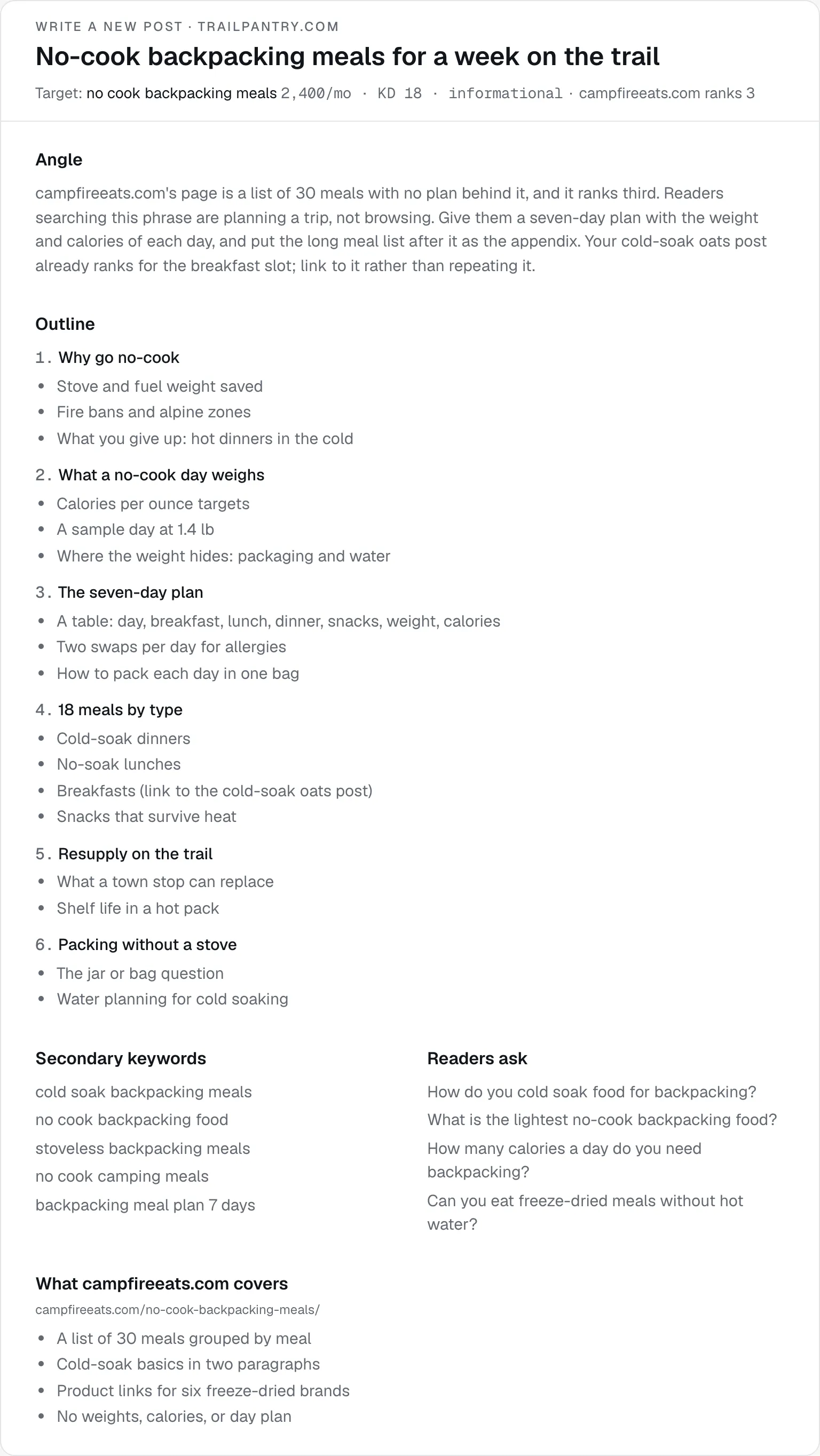
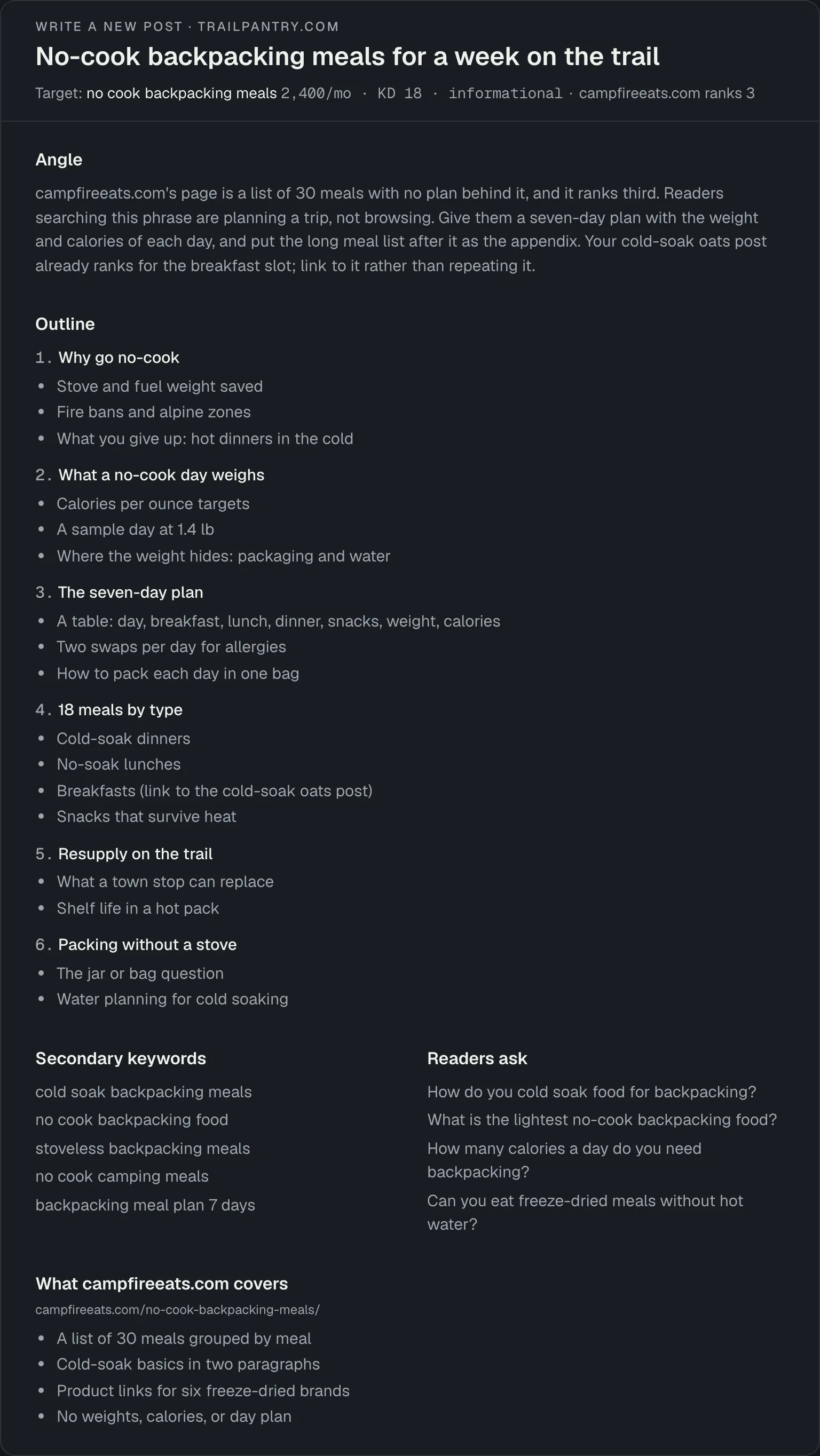
A post plan is what SEO tools call a content brief: a plan for one page with the keyword it targets, the angle that beats the pages already ranking, the headings to cover, and the related terms and questions to answer. It is not the post. It tells the writer what the post has to do before the writing starts.
Compared with content brief tools
Surfer, Frase, and Clearscope are editors. You choose a keyword, and they score your draft against the pages that rank. Finding the keyword is your job, or a feature on a bigger plan.
GapDigest starts one step earlier and stops one step sooner: it chooses the keyword from what your competitors have won and sends the post plan, and it never scores or writes the draft. The same daily checks then show whether last month's page is moving.
Surfer
$49a month
You choose the keyword. It scores the draft.
Frase
$49a month
You choose the keyword. It drafts and scores.
Clearscope
$129a month
You choose the keyword. It grades the draft.
GapDigest
$19a month
Chooses the keyword from a competitor's wins and sends the post plan.
Questions
Where do the keywords come from?
From the gap list: the keywords each competitor you name ranks for in Google's top 20 that your site doesn't. The weekly check finds the new ones, with monthly searches, keyword difficulty, and search intent for each.
How does it pick which keywords get a plan?
It reads a profile of your site, built from your own ranking pages and homepage and refreshed monthly, and scores each new gap keyword for how well it fits what your site is about. Keywords that don't fit are dropped. The rest are ordered by searches against difficulty, so the list opens with the posts a site your size can win, and the top ones get a post plan: up to five a week, within your monthly allowance.
What does 'update a page' mean?
When one of your existing pages already covers the topic, the post plan says so and names the page, so you extend a post that already has some standing instead of splitting the topic across two.
Does it write the post?
No. A post plan is the plan: the title, the angle, the outline, and the questions to answer. The writing is yours. Google does not penalize a page for being written with help, but it does demote unedited pages published in bulk, and a post plan keeps you on the right side of that line.
What's a refresh plan?
For a page of yours that's losing clicks, GapDigest reads that page and the one now ranking above it, and lists what yours is missing, as a plan you can act on instead of a new post. A refresh plan counts against the same monthly allowance as a post plan for a new page.
How many do I get?
Free: 4 a month. Starter: 20 a month. Growth: 60 a month. The allowance resets on the first of the month, and a refresh plan counts against it too. Post plans arrive with the weekly report: one a week on Free, up to five a week on a paid plan.
Which countries have post plans?
The 92 countries where the competitor keyword index is available, listed when you pick a country for a site. In the other countries GapDigest tracks rankings but cannot see what competitors rank for, so there is no gap list to plan from.
Your first post plans arrive within an hour
Add your site and one competitor. Your first report — the keywords you can take and up to four post plans — arrives within an hour, then a new report every week after that, free.